Quick answer: Work in three cost tiers and fix the bathroom first. Under $500 buys lighting, hardware and grab bars. Roughly $500 to $5,000 covers ramps and bathroom reworks. Above $5,000 sits stair lifts, which AmeriGlide lists from $1,499 straight and $7,599 curved as of September 2026.
Nobody modifies a whole house at once. Families do it in a panic, after a fall, in the wrong order.
This checklist puts the work in the order that prevents injuries. Start at the top and stop when the money runs out.
Do this before you buy anything
Two steps save more money than any product choice.
Walk the house at night. Follow the person from bed to bathroom in the dark. Every hesitation, grab or shuffle marks a spot to fix.
Ask about an occupational therapist. An OT watches how someone actually moves and spots risks a contractor will miss. Ask the doctor for a referral, and ask your Area Agency on Aging if it funds home safety assessments.
Medicare does cover occupational therapy at home if the person is homebound and meets the home health rules. It will not cover the modifications themselves.
The three cost tiers
Use these buckets to plan. Actual prices sit in the linked guides.
| Tier | What It Covers | Do It When |
|---|---|---|
| Under $500 | Lighting, non-slip surfaces, DIY grab bars, shower seat, bed rail, small ramps | Immediately, for everyone |
| $500–$5,000 | Professional grab bar installation, threshold or modular ramp, comfort-height toilet, lever handles, medical alert service | After one near-miss, or a mobility change |
| Over $5,000 | Stair lift, tub-to-shower conversion, walk-in tub, door widening, main-floor bedroom | When stairs or bathing become unsafe |
Do not skip the cheap tier to buy the expensive one. Most falls happen in places a $40 fix would have covered.
Where a grab bar goes
The height is not a matter of taste. These are the federal accessibility figures installers work to.
Bathroom: fix this first
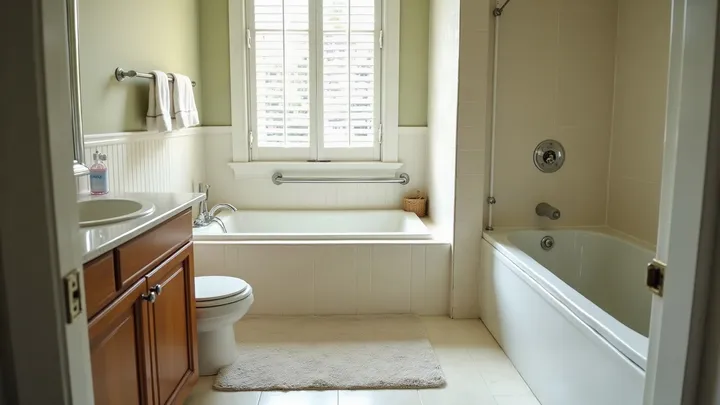
The bathroom is where the serious injuries happen. Wet, hard, narrow and full of things people grab that were never meant to hold weight.
Under $500
Put a grab bar where the person already reaches. Towel bars and soap dishes are not grab bars, and they fail under load.
Add a non-slip mat inside the tub and a low-pile rug with a rubber backing outside it. Replace the nightlight with something brighter.
Get a shower seat sized to the space. For a tub, a transfer bench is usually the right answer.
Choose bars carefully. Our best grab bars guide explains why suction cup bars are a temporary tool only.
$500 to $5,000
Have bars installed into studs or blocking by someone who understands tile and fiberglass. Our grab bar installation cost guide covers who does this work and what it runs.
Swap a low toilet for a comfort-height model. Add a handheld shower head on a slide bar.
Over $5,000
Convert the tub to a curbless or low-threshold shower, or install a walk-in tub. The tradeoffs are real, and our walk-in tub vs walk-in shower comparison lays them out.
For a full room-by-room pass, work through the bathroom safety checklist for seniors.
Entrances and outdoor paths
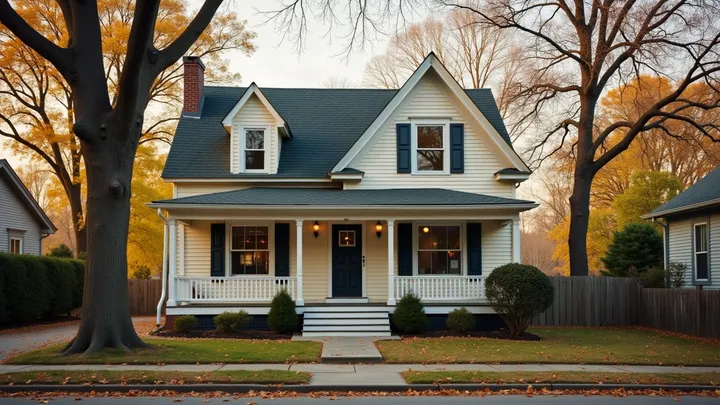
The front door is the second most dangerous place in the house.
Check the steps for loose treads and a solid handrail on at least one side. Add a second rail if the person uses a cane.
Light the path to the driveway and the mailbox. Motion-sensor fixtures work better than switches nobody remembers.
Fix the threshold. A raised metal strip catches walkers and toes.
If steps are the problem, price a ramp before you price anything else. Our wheelchair ramp cost guide covers portable, modular and wood options plus the 1:12 slope rule.
Stairs inside the house
Interior stairs are a slower problem than the bathroom, but a bigger one.
Start cheap. Add a second handrail, replace worn carpet, and put lights and a switch at both the top and bottom.
Mark the edge of each tread with contrasting tape if depth perception is fading.
When climbing is no longer safe, you have two real options. Move the bedroom downstairs, or install a stair lift.
Stair lift prices vary enormously by staircase shape. AmeriGlide’s published list prices start at $1,499 for straight lifts and $2,999 for outdoor lifts. Curved lifts start at $7,599 with installation included, as of September 2, 2026.
Our stair lift cost guide compares brands and explains why curved rails cost so much more. If the staircase is narrow, ask dealers about standing or perch models.
Bedroom
Most nighttime falls happen between the bed and the bathroom.
Set the bed height so feet rest flat on the floor when sitting on the edge. Too high and too low are both dangerous.
Put a lamp and a phone within reach without standing. Clear a straight, uncluttered path to the door.
Add a bed rail only after reading the safety warnings. Full-length rails carry an entrapment risk, and a short assist handle is often safer.
If getting up is the real struggle, an adjustable base helps more than a rail. It raises the head and the knees so the person can pivot out.
A hospital bed is different. Medicare lists hospital beds as durable medical equipment, so Part B may cover one when a doctor documents medical need.
Living areas and kitchen
These rooms rarely cause the worst falls, but they cause the most of them.
Remove throw rugs or tape them down. Run cords along walls, never across walkways.
Raise seating height. A chair that is too low forces a hard push-up, and that is when people tip.
A power lift chair solves this directly. See our best lift chairs for the elderly guide for sizing by height and weight.
In the kitchen, move daily items between waist and shoulder height. Nobody should climb a step stool for a cereal bowl.
Replace round doorknobs and faucet handles with levers. Arthritic hands manage levers far better.
Communication and emergencies
A safe house still needs a way to call for help.
Put a charged phone in the bedroom and the bathroom. Program one-touch dialing for the closest family member.
A monitored medical alert system covers the case where the person cannot reach a phone. Compare services in our best medical alert systems for seniors guide.
Test the smoke and carbon monoxide alarms and write the date on them.
Paying for all of it
Original Medicare will not help with the building work. It defines durable medical equipment as items that are durable and used for a medical reason. They must also be useful only to someone sick or injured, used at home, and expected to last at least 3 years.
Permanent modifications fail that test. Our guide to Medicare and home modifications explains where the exceptions are, including Medicare Advantage and PACE.
Grants do exist. USDA Section 504 pays up to $10,000 to very-low-income homeowners age 62 and older. The home must sit in an eligible rural area, and the money must remove health and safety hazards.
Veterans can get up to $6,800 through a VA HISA grant for a service-connected disability, or $2,000 otherwise. Rebuilding Together’s Safe at Home program provides no-cost modifications through local affiliates.
Our grants for home modifications guide has the full list and the order to apply in.
Whatever you pay yourself, keep receipts. IRS Publication 502 treats medically necessary improvements as capital expenses. Ramps, widened doorways and bathroom support bars usually add no home value.
When value does not rise, the full cost may count as a medical expense.
When modifications are not enough
At some point the question changes from hardware to hours.
The CareScout Cost of Care Survey put the 2025 national median at $35 an hour for a non-medical caregiver. Assisted living ran $6,200 a month. Our in-home care cost guide breaks those rates down by state.
Start small. A few hours a week of companion care often extends independence far longer than another handrail.
Bottom line
Fix the bathroom and the front entrance first, because that is where the injuries that end independence actually happen. Spend the cheap tier fully before you spend the expensive tier at all.
Get an occupational therapist involved if mobility is already changing, and apply for grants before you write a check. Veterans should call their VA medical center about HISA, and rural homeowners 62 and older should call USDA Rural Development.
Then reassess every six months, because needs change faster than houses do.
Frequently asked questions
What is the first thing to fix for aging in place?
The bathroom, then the front entrance. Most serious falls at home happen getting in and out of a tub or shower, or on steps at the door. Grab bars, a shower seat and a safe entry path cost far less than a stair lift and prevent the injuries that end independence.
Does Medicare pay for aging in place modifications?
Original Medicare pays nothing toward grab bars, ramps, walk-in tubs or stair lifts. Medicare defines durable medical equipment as items that are durable, medical in purpose, useful only to someone sick or injured, used at home and expected to last 3 years. Permanent home changes fail that test.
How much should I budget to age in place?
Work in tiers. Under $500 buys hardware, lighting and small equipment. Roughly $500 to $5,000 covers professional grab bar installation, a ramp or a bathroom rework. Above $5,000 is stair lifts and full bathroom conversions. AmeriGlide lists straight stair lifts starting at $1,499 and curved models at $7,599 as of September 2026.
Should I hire an occupational therapist first?
It is a smart first step if mobility is already changing. An occupational therapist watches how the person actually moves through the house and spots risks a contractor will not. Ask the doctor for a referral, and ask your Area Agency on Aging whether it funds home safety assessments.
Is it cheaper to age in place or move?
It depends on care needs, not just the house. The CareScout Cost of Care Survey put the 2025 national median for a non-medical caregiver at $35 an hour and assisted living at $6,200 a month. A one-time $5,000 bathroom rework often costs less than a year of either.
Sources
- Medicare.gov — Durable medical equipment (DME) coverage — checked 2026-09-02
- Medicare.gov — Home health services — checked 2026-09-02
- USDA Rural Development — Single Family Housing Repair Loans & Grants — checked 2026-09-02
- VA Prosthetic and Sensory Aids Service — HISA — checked 2026-09-02
- Rebuilding Together — Safe at Home — checked 2026-09-02
- CareScout Cost of Care Survey 2025 — checked 2026-09-02
- AmeriGlide stair lift pricing — checked 2026-09-02
- IRS Publication 502 (2025), Medical and Dental Expenses — checked 2026-09-02