Quick answer: Work the bathroom in four price tiers, starting with free fixes and ending with a remodel. The two changes that matter most are a bolted grab bar at the tub entry and a seat in the shower, which together cost about $40 to $180 in September 2026. More than 14 million adults 65 and older report a fall each year.
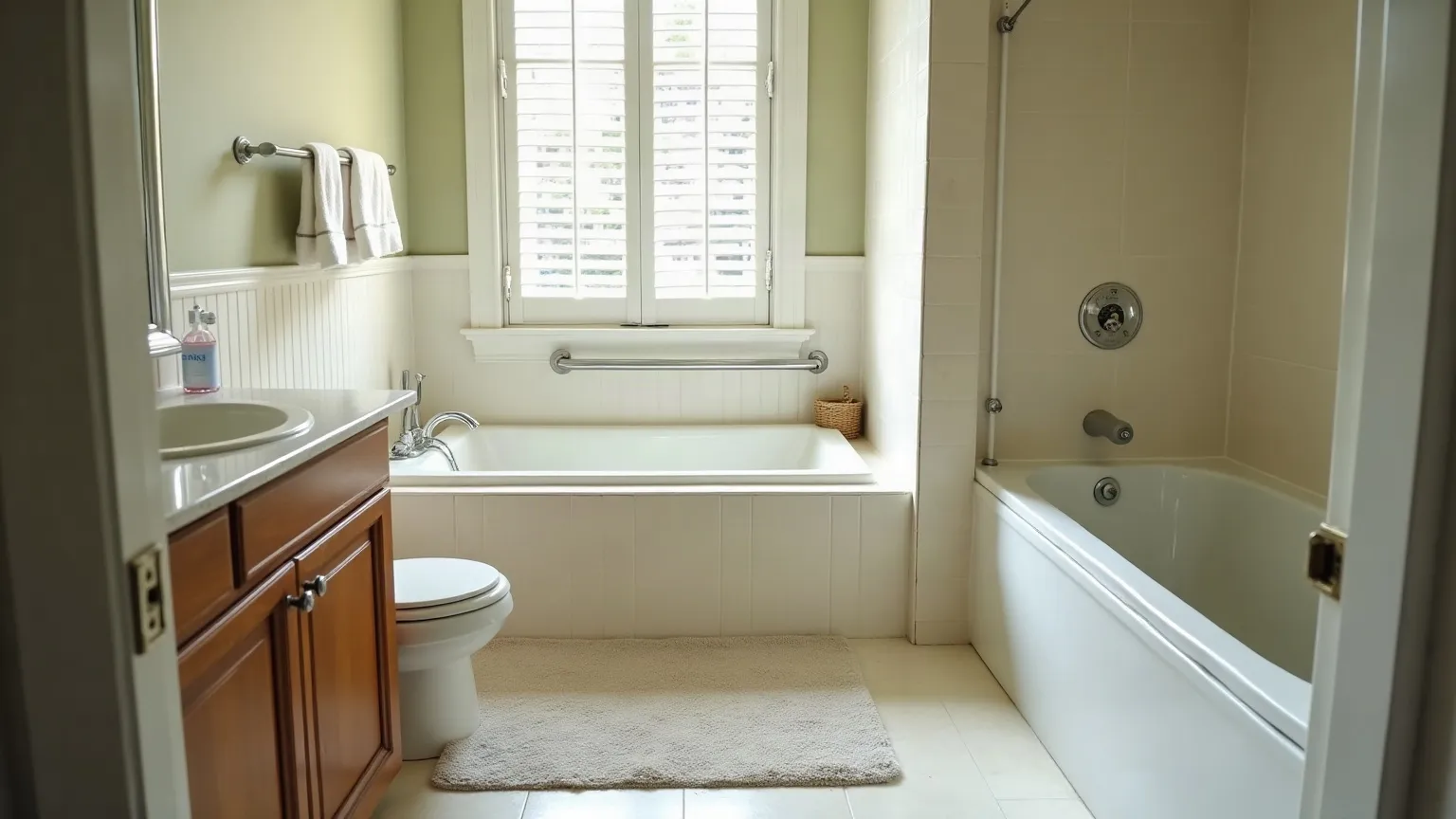
The bathroom concentrates every hazard in one small room. Wet tile, a high tub wall, a low toilet, and nothing solid to hold.
CDC reports that more than 14 million adults 65 and older, or one in four, say they fall each year. About 37 percent of those who fall report an injury that needed treatment or limited activity, which is roughly nine million injuries.
Falls are also the leading cause of injury death for adults 65 and older. Hip fractures drive about 300,000 hospitalizations a year.
Work this list in order. Do not skip to the expensive part.
Tier 1: free, do it today
These cost nothing and take an afternoon.
- Remove every throw rug and bath mat that is not rubber-backed.
- Clear the tub of bottles, and put daily items at waist height.
- Turn the water heater down to 120°F to prevent scalds.
- Test the toilet paper holder. If anyone uses it to stand, that is a fall waiting to happen.
- Unlock the bathroom door lock, or remove it, so help can get in.
- Move the phone or the alert button to somewhere reachable from the floor.
- Turn on the exhaust fan during showers so mirrors and floors stay dry.
- Leave a light on at night, or add a plug-in night light on the route.
Also walk the path from the bed to the bathroom in the dark. Fix whatever you trip on.
Tier 2: under $100
This tier buys the biggest safety gain per dollar.
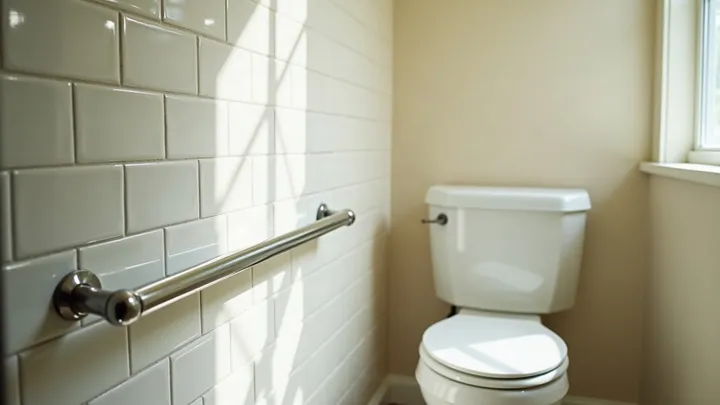
Grab bars. CDC advises bars inside and outside the tub or shower and next to the toilet. Basic knurled steel bars cost $8 to $62 and Moen Home Care bars cost $12 to $89.
Mount them 33 to 36 inches above the floor with exactly 1 1/2 inches of clearance from the wall. The ADA Standards require the bar and its anchors to resist 250 pounds of force.
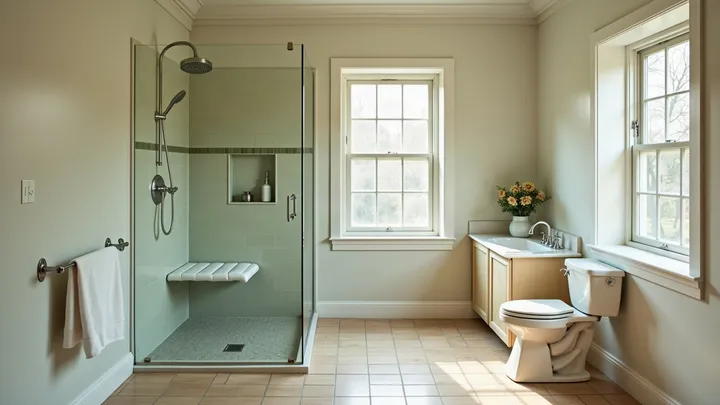
A shower chair. A Medline chair with a back cost $30.84 to $34.48 in September 2026. A Drive chair with padded arms cost $90.64.
A handheld shower head on a slide bar. Sitting under a fixed spray means twisting and reaching, which defeats the chair.
A non-slip mat or adhesive strips for the tub floor.
Brighter bulbs. CDC lists more or brighter light as a fall prevention step. Swap in the highest safe wattage the fixture allows.
Do not rely on a suction-cup bar. It costs $8 to $26 and it releases without warning. Use one only while you wait for a real installation.
Where a grab bar goes
The height is not a matter of taste. These are the federal accessibility figures installers work to.
Tier 3: $100 to $500
Now you are changing how the person gets in and out.
A tub transfer bench, $157 to $321 in September 2026, so a leg never has to clear the tub wall.
A raised toilet seat or a toilet safety frame. Moen’s toilet safety bar ran $33.83 to $39.30, and a flip-up grab bar beside the toilet ran $154.76 to $180.56.
A wall-mounted folding shower seat. Moen’s stainless and teak model was $396.69. This needs blocking in the wall, so budget for the installer too.
Professional installation. Installing bars on tile or fiberglass is the part most families should hire out. Our guide to grab bar installation cost covers what to expect.
A security pole if there is no wall beside the toilet.
Tier 4: over $500
Only spend here after the cheap layer is in and something still feels unsafe.
- Replace the tub with a curbless or low-threshold shower.
- Install a comfort-height toilet.
- Widen the doorway to 32 inches of clear width.
- Add a walk-in tub if soaking matters to the person.
- Move the bathroom to the main floor.
Our comparison of a walk-in tub versus a walk-in shower is the right next read before you sign a remodel contract.
Do a five-minute walkthrough first
Do not shop until you have watched. Ask the person to use the bathroom normally while you stand back.
Watch four moments. Stepping over the tub wall. Standing up from the toilet. Turning around in the shower. Reaching for a towel.
Whatever they grab is where a bar belongs. If they grab a towel bar, a shower door, or the sink edge, that is the fix list. None of those are built to hold a person.
Then mark the wall with painter’s tape at the height their hand landed. Give the tape to the installer.
Get the heights right
Small numbers decide whether equipment gets used.
Grab bars: 33 to 36 inches. That is the ADA range for bars at the toilet, measured to the top of the gripping surface.
Wall clearance: exactly 1 1/2 inches. The Access Board calls it an absolute dimension. It stops an arm from wedging behind the bar during a fall.
Bar diameter: 1 1/4 to 2 inches for a round bar. Wider is harder to grip, not safer.
Shower seat: 17 to 19 inches. That is the ADA height for a built-in seat, and it matches most wheelchair seats, which makes transfers easier.
Shower controls: at least 1 1/2 inches above the bar, so knuckles clear when you grab.
The checklist in priority order
| Priority | Change | Cost (Sept 2026) |
|---|---|---|
| 1 | Remove loose rugs and clutter | $0 |
| 2 | Brighter bulbs and a night light | Under $25 |
| 3 | Grab bar at the tub or shower entry | $8–$89 plus labor |
| 4 | Shower chair or bench | $29–$95 |
| 5 | Handheld shower head | Varies |
| 6 | Grab bar beside the toilet | $8–$89 plus labor |
| 7 | Non-slip tub surface | Under $40 |
| 8 | Tub transfer bench | $157–$321 |
| 9 | Wall-mounted folding seat | About $397 |
| 10 | Curbless shower or walk-in tub | Remodel, get quotes |
Print this and check items off with the person who uses the room. Their opinion decides what actually gets used.
Pick the products
For bars, our guide to the best bathroom grab bars covers Moen, Delta and budget steel with current prices. For seats, our guide to shower chairs and transfer benches covers sizing by the back of the knee.
If money is tight, loan closets and state assistive technology programs hand out this exact equipment. Our guide to free medical equipment for seniors shows how to find them.
Once the bathroom is done, keep going with our aging in place home checklist, which covers the rest of the house in the same cost tiers.
Bring in an occupational therapist
An OT watches the real transfer and often changes the plan. They will tell you the bar belongs six inches lower, or that a bench beats a chair.
Medicare Part B covers outpatient occupational therapy when a doctor orders it, separately from its durable medical equipment rules. Ask for a referral after any fall, a hospital stay, or a new diagnosis.
Talk to the doctor as well
The room is only half of it. CDC’s fall prevention advice starts with the doctor.
Ask for a falls risk evaluation. Ask a doctor or pharmacist to review every prescription and over-the-counter medicine for anything causing dizziness or drowsiness. Ask about vitamin D and osteoporosis screening, and get eyes checked once a year.
Strength and balance exercise does more for fall risk than any product in this article. Tai chi is the example CDC names.
Bottom line
Start with the free tier, then spend under $100 on a grab bar at the tub entry, a shower seat and better light. Move to a transfer bench at $157 to $321 only if stepping over the tub wall is still the problem. Save the remodel for last. Ask the doctor for an occupational therapy referral and a medication review, because those change fall risk more than any purchase.
Frequently asked questions
What is the most important bathroom safety change for a senior?
A bolted grab bar at the tub or shower entry, where the foot leaves the floor. CDC advises grab bars inside and outside the tub or shower and next to the toilet. A basic steel bar costs $8 to $62 and a Moen Home Care bar $12 to $89, so the bar is cheap and the installation is what matters.
How common are falls among older adults?
CDC reports that more than 14 million adults aged 65 and older, or one in four, say they fall each year. About 37 percent of those who fall report an injury that needed medical treatment or limited activity for at least a day, which works out to roughly nine million fall injuries a year.
Do I need a walk-in tub to make a bathroom safe?
Usually not. A grab bar, a shower seat, a handheld shower head and better lighting solve most problems for a few hundred dollars. A walk-in tub or a curbless shower is a remodel that costs thousands. Try the cheap layer first and see what still feels risky.
How high should a shower seat be?
The ADA Standards set built-in shower seats at 17 to 19 inches above the floor, which matches most wheelchair seat heights. For a portable chair, set the legs to the distance from the floor to the back of the knee so the feet rest flat and the knees sit level with the hips.
Who can assess a bathroom for an older adult?
An occupational therapist. They watch the actual transfer into the tub and onto the toilet, then recommend equipment and placement. Medicare Part B covers outpatient occupational therapy when a doctor orders it, so ask the doctor for a referral after any fall.
Sources
- CDC — Older Adult Falls Data — checked 2026-09-02
- CDC — Preventing Falls and Hip Fractures — checked 2026-09-02
- U.S. Access Board — ADA Standards guide, Chapter 6: Toilet Rooms — checked 2026-09-02
- U.S. Access Board — ADA Standards guide, Chapter 6: Bathing Rooms — checked 2026-09-02
- Moen store — bathroom safety products — checked 2026-09-02
- Vitality Medical — shower chairs and seats, published prices — checked 2026-09-02
- Medicare.gov — Durable medical equipment (DME) coverage — checked 2026-09-02