Quick answer: A folding portable ramp costs $160 to $361, and a modular aluminum ramp system costs $1,862 to $13,882 depending on length and shape, based on dealer prices published in September 2026. Length is set by the ADA slope rule: 12 inches of ramp for every 1 inch of rise.
Ramp shopping goes wrong in one predictable way. People buy for the price and end up with a ramp that is too steep to push a wheelchair up.
Start with the tape measure, not the catalog.
What you should expect to pay
Measure the rise first
Put a tape measure on the ground and read the height to the top of the porch or threshold. That number is the rise.
The ADA Standards cap the running slope of a ramp at 1:12. One inch of rise needs 12 inches of ramp.
The Access Board also caps the cross slope at 1:48, sets a minimum clear width of 36 inches, and limits a single run to 30 inches of rise before a level landing is required. For outdoor ramps it recommends a gentler 7.5 percent running slope, because concrete and asphalt never come out perfectly flat.
| Rise | Ramp Run at 1:12 | Typical Situation |
|---|---|---|
| 2 in | 2 ft | Raised threshold |
| 6 in | 6 ft | One step |
| 14 in | 14 ft | Two steps |
| 24 in | 24 ft | Three to four steps |
| 30 in | 30 ft | Maximum for one run |
A steeper ramp is legal in a private home. It is still a bad idea if anyone has to push the chair.
The four kinds of ramp
Threshold ramps bridge a doorsill or a single small step. Rubber and aluminum models start around $41 and run to $644 for the widest units.
Portable folding ramps carry in a car trunk and set up in a minute. The EZ-ACCESS SUITCASE Advantage Series is aircraft-grade aluminum with an 800-pound capacity and sells for $160 to $361 depending on length.
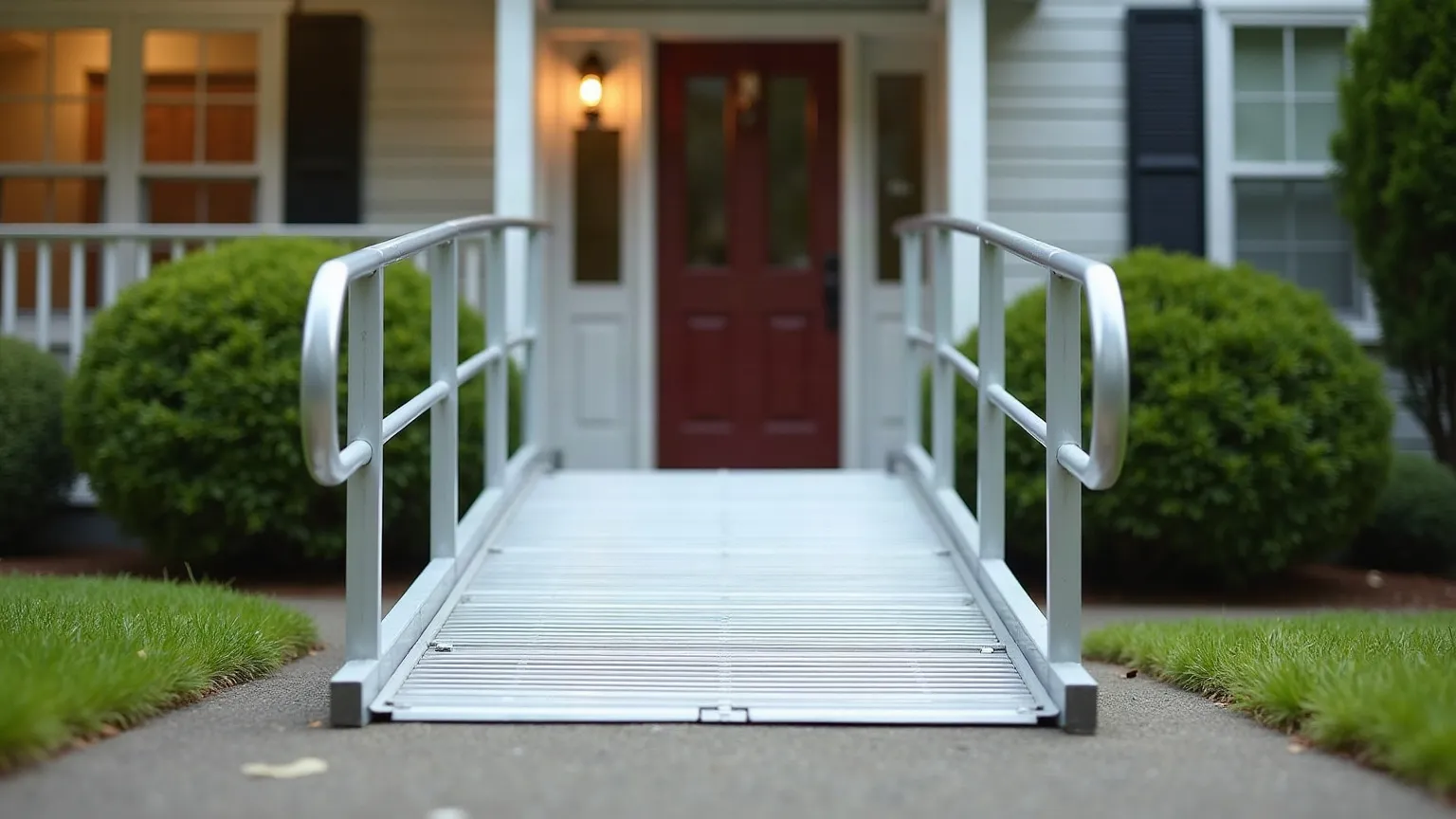
Modular aluminum systems bolt together from decking sections, platforms and handrails. They handle any rise, come apart when you move, and usually skip footings and permits.
Wood and concrete ramps are built on site. Wood is the traditional choice for a long ramp on a budget. Concrete lasts forever and cannot be moved or resold.
How long a ramp has to be
One rule decides almost everything about the price: twelve inches of ramp for every inch you have to climb.
| Height you need to climb | Ramp you need |
|---|---|
| 4 in (one step) | 4 ft of ramp |
| 8 in (two steps) | 8 ft of ramp |
| 16 in | 16 ft of ramp |
| 24 in (a typical porch) | 24 ft of ramp |
| 30 in | 30 ft, then a level landing before the next run |
Ramp prices in September 2026
We compared prices published by Vitality Medical for EZ-ACCESS and SafePath products on September 2, 2026.
| Ramp | Type | Detail | Price (Sept 2026) |
|---|---|---|---|
| SafePath EZ Edge | Rubber threshold | Various widths | $41.10–$643.79 |
| EZ-ACCESS TRANSITIONS | Angled entry, modular | Small rises | $54.00–$217.00 |
| EZ-ACCESS SUITCASE Advantage | Portable, single fold | 800 lb capacity | $160.00–$361.00 |
| GATEWAY 3G | Portable solid surface kit | With handrails | $391.00–$1,885.00 |
| EZ-ACCESS PATHWAY, straight | Modular system | 1,000 lb capacity | $1,862.00–$9,419.00 |
| EZ-ACCESS PATHWAY, L-shaped | Modular system | Turns 90 degrees | $3,905.00–$12,069.00 |
| EZ-ACCESS PATHWAY, U-shaped | Modular system | Switchback | $6,470.00–$13,882.00 |
Length drives everything. In the straight PATHWAY line, a 10-foot kit was $1,865 and a 14-foot kit was $2,492 on September 2, 2026. Adding a 4-foot platform to the 14-foot kit took it to $3,467.
That works out to roughly $150 to $190 per linear foot for a straight modular ramp before labor.
Wood, concrete and permits
A wood ramp built by a local carpenter is often the cheapest long ramp, because lumber and labor prices are local. We could not find a published national price for wood ramp construction, so get at least three written bids.
Wood needs pressure-treated lumber, a non-slip surface, handrails on both sides and yearly maintenance. Untreated decking gets slick in the rain.
Concrete costs more up front and never moves again. Only pour concrete if the person is staying in that home for good.
Permits vary by city. Amramp says its patented modular component system usually does not require a building permit, concrete footings or digging up the property, which is one reason families pick modular for a fast turnaround.
Call the building department before you build. Ask about setbacks, handrail rules and whether an attached ramp triggers an inspection.
Renting for a short recovery
If the need is temporary, after a hip replacement or a stroke rehab stay, rent.
Modular ramp companies including Amramp rent the same systems they sell. Pricing is quoted by length and location, so ask for the monthly rate, the minimum term, and the delivery and pickup charges in writing.
A rented modular ramp can also convert to a purchase later. Ask whether rent paid applies to the purchase price.
Details people miss
Handrails. Any ramp with a real rise needs rails on both sides. Buy them with the ramp.
Landings. You need a flat area at the top big enough to open the door while sitting in the chair. A ramp that dead-ends at an inward-swinging door does not work.
Surface. Pick punched or grooved aluminum, not smooth plate. Ice and wet leaves are the enemy.
Edge protection. Raised edges keep a caster from rolling off the side.
Turning space at the bottom. Leave room to turn without rolling into the driveway.
How a quote is put together
Ask every company to break the quote into four lines. Vague single-number quotes hide the expensive parts.
Ramp sections. The decking itself, priced by length. In the EZ-ACCESS straight PATHWAY line that ran about $1,862 for 12 feet in September 2026.
Platforms and turns. A 4-foot platform added roughly $1,000 to a straight PATHWAY kit, and an L-shaped system started at $3,905 against $1,862 for straight. Turns are where the money goes.
Handrails. Confirm they are included on both sides for the full length.
Labor and delivery. Modular systems assemble in hours, not days, but somebody still has to level the ground and set the base.
Then ask two more questions. Who pulls the permit if one is needed, and what does removal cost if the ramp is no longer needed.
Get three quotes, all for the same rise and the same slope. A cheaper bid is often just a steeper ramp.
Who helps pay
Original Medicare pays nothing. Part B covers durable medical equipment used for a medical reason in your home, and a ramp is a home modification instead.
Veterans should ask about HISA. The benefit pays a lifetime maximum of $6,800 for a service-connected disability, or $2,000 in other qualifying cases. Note the limits: HISA excludes portable ramps, porch lifts and stair glides, so it applies to a permanent ramp only.
Rural homeowners aged 62 and older can apply for a USDA Section 504 grant of up to $10,000 to remove health and safety hazards. Loans go up to $40,000 at a fixed 1 percent, and the two can combine to $50,000.
Medicaid home and community based services waivers pay for accessibility changes in many states. Rules differ by state, so call your state Medicaid office.
Our guide to grants for home modifications covers each program in detail, and our guide to what Medicare pays for home modifications explains the Medicare Advantage exceptions. Used ramps also show up through the channels in our guide to free medical equipment for seniors.
If the ramp is one part of a bigger plan, work through our aging in place home checklist before you spend.
Bottom line
Buy a portable folding ramp at $160 to $361 for thresholds and single steps, and a modular aluminum system at roughly $150 to $190 per foot for anything higher. Measure the rise and multiply by 12 to get the run before you shop. Rent if the need is temporary, and call the building department before you build anything permanent. Veterans should apply for HISA first, and rural homeowners over 62 should call USDA Rural Development.
Frequently asked questions
How much does a wheelchair ramp for a house cost?
A folding portable ramp costs $160 to $361. A straight modular aluminum ramp system costs $1,862 to $9,419, an L-shaped system $3,905 to $12,069, and a U-shaped system $6,470 to $13,882. Those are dealer prices published in September 2026 and do not include installation labor.
How long does a wheelchair ramp need to be?
Use the ADA maximum running slope of 1:12. That means 12 inches of ramp for every 1 inch of rise. A 24-inch porch needs 24 feet of ramp run, plus landings. A single ramp run can rise no more than 30 inches before a level landing is required.
Does Medicare pay for a wheelchair ramp?
No. Original Medicare Part B covers durable medical equipment used for a medical reason in your home, such as wheelchairs, walkers and hospital beds. A ramp is a home modification, not durable medical equipment, so Part B pays nothing. Some Medicare Advantage plans include home-safety benefits, so ask your plan.
Do you need a permit for a wheelchair ramp?
It depends on your city or county, and often on whether the ramp is attached and how high it sits. Amramp states that its modular component system usually does not require a building permit, concrete footings or digging. Call your local building department before you start.
Can you rent a wheelchair ramp?
Yes. Modular aluminum ramp companies including Amramp rent the same systems they sell, which suits a short recovery after surgery. Rental pricing is quoted by the job and depends on the length and your location, so ask for a written monthly rate plus the delivery and pickup fee.
Sources
- U.S. Access Board — ADA Standards guide, Chapter 4: Ramps and Curb Ramps — checked 2026-09-02
- Vitality Medical — wheelchair ramps for home, published prices — checked 2026-09-02
- Vitality Medical — EZ-ACCESS Straight PATHWAY modular ramp system prices — checked 2026-09-02
- Vitality Medical — EZ-ACCESS SUITCASE Advantage Series portable ramp prices — checked 2026-09-02
- Amramp — modular ramps, permits and rent-or-buy — checked 2026-09-02
- VA — Home Improvements and Structural Alterations (HISA) benefit amounts — checked 2026-09-02
- USDA Rural Development — Single Family Housing Repair Loans & Grants — checked 2026-09-02
- Medicare.gov — Durable medical equipment (DME) coverage — checked 2026-09-02